DFMEA and PFMEA score each failure mode by severity × occurrence × detection to give an RPN, so you know where to act first. The special and significant characteristics that come out of the FMEA flow straight to the control plan — which specifies, per characteristic, what to measure, with which gauge, at what frequency, by what method, and the reaction on non-conformance. Every limit is drawn from the specification master: nominal, USL, LSL and criteria.
The FMEA decides what matters; the control plan says how it is kept in control — one chain, built from the specification master. New to the method? Read our guide, the FMEA & control plan guide.
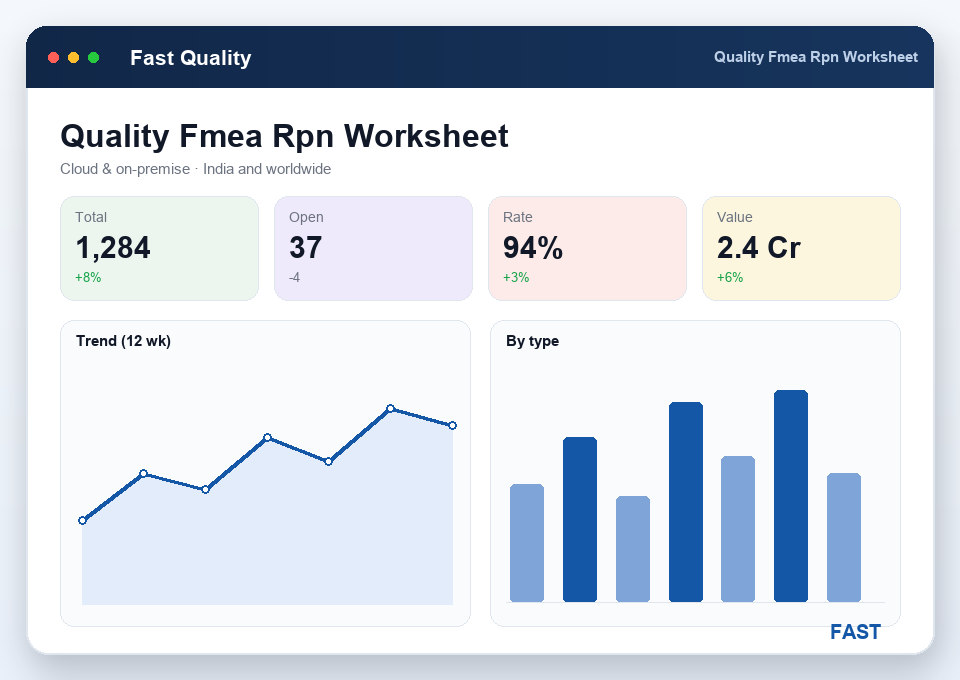
The design FMEA analyses how a product can fail; the process FMEA analyses how the process can fail. Both work the same way: list each failure mode and its effect, then rate it for severity, occurrence and detection. The product of the three is the risk priority number — RPN = S × O × D — and it ranks where to act first. A high-severity, hard-to-detect failure surfaces at the top, so improvement effort goes where the risk actually is rather than where it is loudest. DFMEA and PFMEA are carried as APQP and PPAP elements, linked to the item and its process specifications.
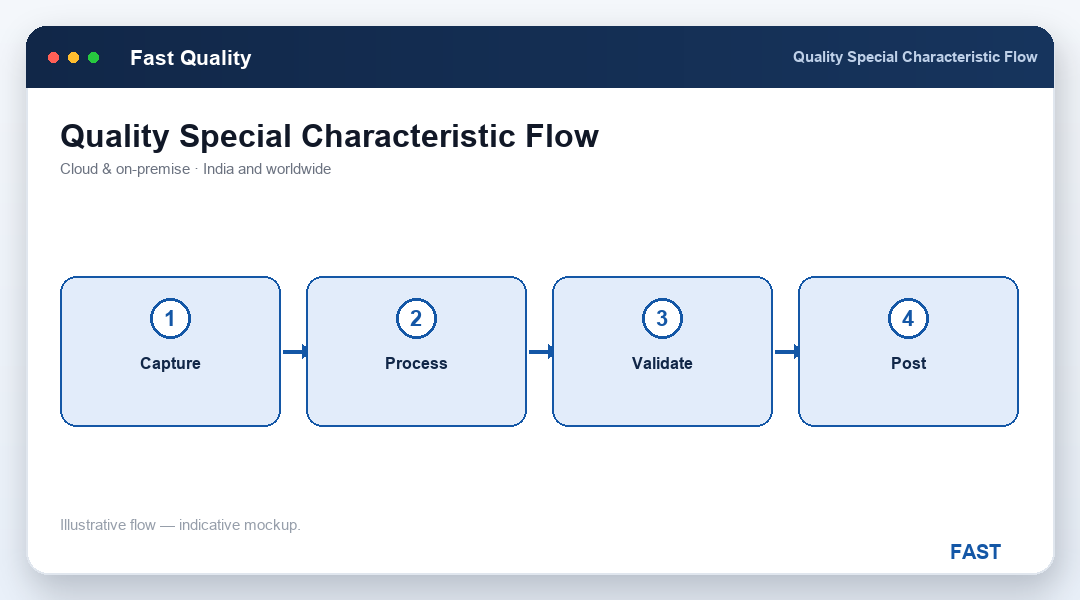
A risk analysis that stops at a number changes nothing. The special and significant characteristics the FMEA identifies flow straight to the control plan, so the features whose variation affects safety, fit or function are the ones the plan controls. The same failure mode also maps to a defect code, so when that defect is later found on the line the loop back to the FMEA is traceable. The FMEA and the control plan are one chain — decide, then control — not two documents that drift apart.
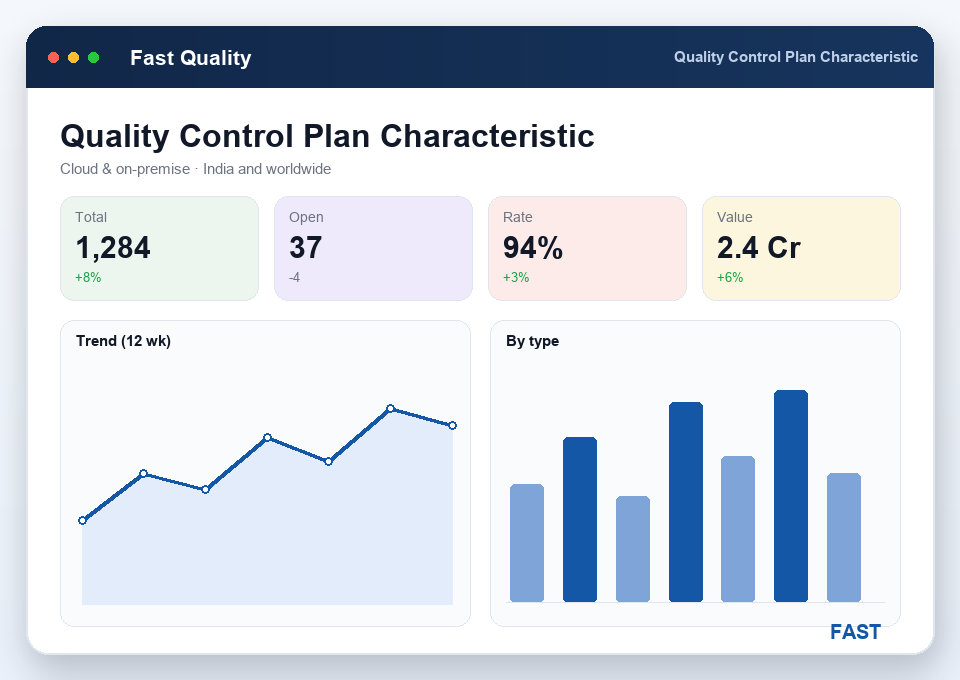
The control plan is the operating instruction for keeping a characteristic in control. For each one it specifies what to measure, with which gauge — drawn from the gauge master — at what frequency, by what method, and, crucially, the reaction on non-conformance: contain, adjust, quarantine, or raise the NCR. That last column is what turns a control plan from a wish-list into a plan an operator can actually follow when a reading goes out of tolerance. A gauge must pass Gauge R&R and be in-calibration before it appears on a characteristic.
The control plan does not invent its limits. It is built from the specification master — the item and process specifications that hold nominal, USL, LSL and acceptance criteria per characteristic. Those are the very limits inspection records readings against and SPC uses to compute capability. So there is a single definition of what good means, read by the control plan, by inspection and by SPC alike — change it once and every downstream check sees the change, instead of three copies of a tolerance drifting apart.
Design and process failure-mode analyses, each listing failure modes and effects and carried as an APQP and PPAP element.
Severity, occurrence and detection multiply to the risk priority number, ranking failure modes so action goes to the real risk.
Features affecting safety, fit or function are flagged in the FMEA and flow to the control plan for tighter control.
Per characteristic: what to measure, which gauge, what frequency, what method and the reaction on non-conformance.
Nominal, USL, LSL and criteria per item and process — one definition of good, read by the control plan, inspection and SPC.
Each characteristic links to a gauge from the gauge master and a frequency; the gauge must pass GR&R and be in-calibration.
Most FMEA pain isn't the scoring — it's the drift between the FMEA, the control plan and the specification. For the bigger picture, read what is quality management software?
DFMEA is the design FMEA — it analyses the ways a product design can fail. PFMEA is the process FMEA — it analyses the ways a manufacturing process can fail. Both use the same discipline: identify each failure mode and its effect, then score it by severity, occurrence and detection to produce a risk priority number (RPN). In Fast Quality both are carried as APQP and PPAP elements and linked to the item and its process specifications, so the analysis stays tied to the part it protects.
RPN — the risk priority number — is severity multiplied by occurrence multiplied by detection (RPN = S × O × D). Each is rated on a defined scale, and the higher the product the higher the priority for action. RPN ranks where to act first; the special and significant characteristics that come out of the FMEA are then controlled on the control plan. CAPA outcomes from an 8D feed an RPN re-evaluation through change management, so the FMEA stays current.
The special and significant characteristics identified in the FMEA flow straight to the control plan. For each of those characteristics the control plan specifies what to measure, with which gauge, at what frequency, by what method, and the reaction on non-conformance. So the FMEA decides what matters and the control plan says how it is kept in control — the two are one chain, not two disconnected documents, and a failure mode maps to a defect code so a defect detected on the line traces back to the FMEA.
The control plan is built from the specification master, which defines the characteristics and their nominal, upper specification limit (USL), lower specification limit (LSL) and acceptance criteria per item and per process. Those are the same limits that inspection records readings against and that SPC uses to compute capability — one source of what good means, read by the control plan, inspection and SPC alike.
A special or significant characteristic is a feature whose variation materially affects safety, fit or function. It is flagged from the FMEA, controlled by the control plan and prioritised in SPC. Marking a characteristic special is what routes it into tighter control — a specified gauge, a defined frequency and a reaction plan — rather than being treated like any ordinary dimension.
Yes. Each control-plan characteristic links to a gauge from the gauge master and to an inspection frequency, plus the method and the reaction on non-conformance. A gauge must pass Gauge R&R and be in-calibration before it is used on a control-plan characteristic, so the plan is not just a list of checks but a set of checks tied to qualified, calibrated measuring equipment. Fast Quality runs cloud or on-premise for IATF 16949 and ISO 9001 manufacturers across India and worldwide.
Live demo of DFMEA and PFMEA scoring, special characteristics flowing to a control plan, and limits from your own specification master. Cloud or on-premise, no generic slideshow.